Open the door first: the test that splits the problem in two
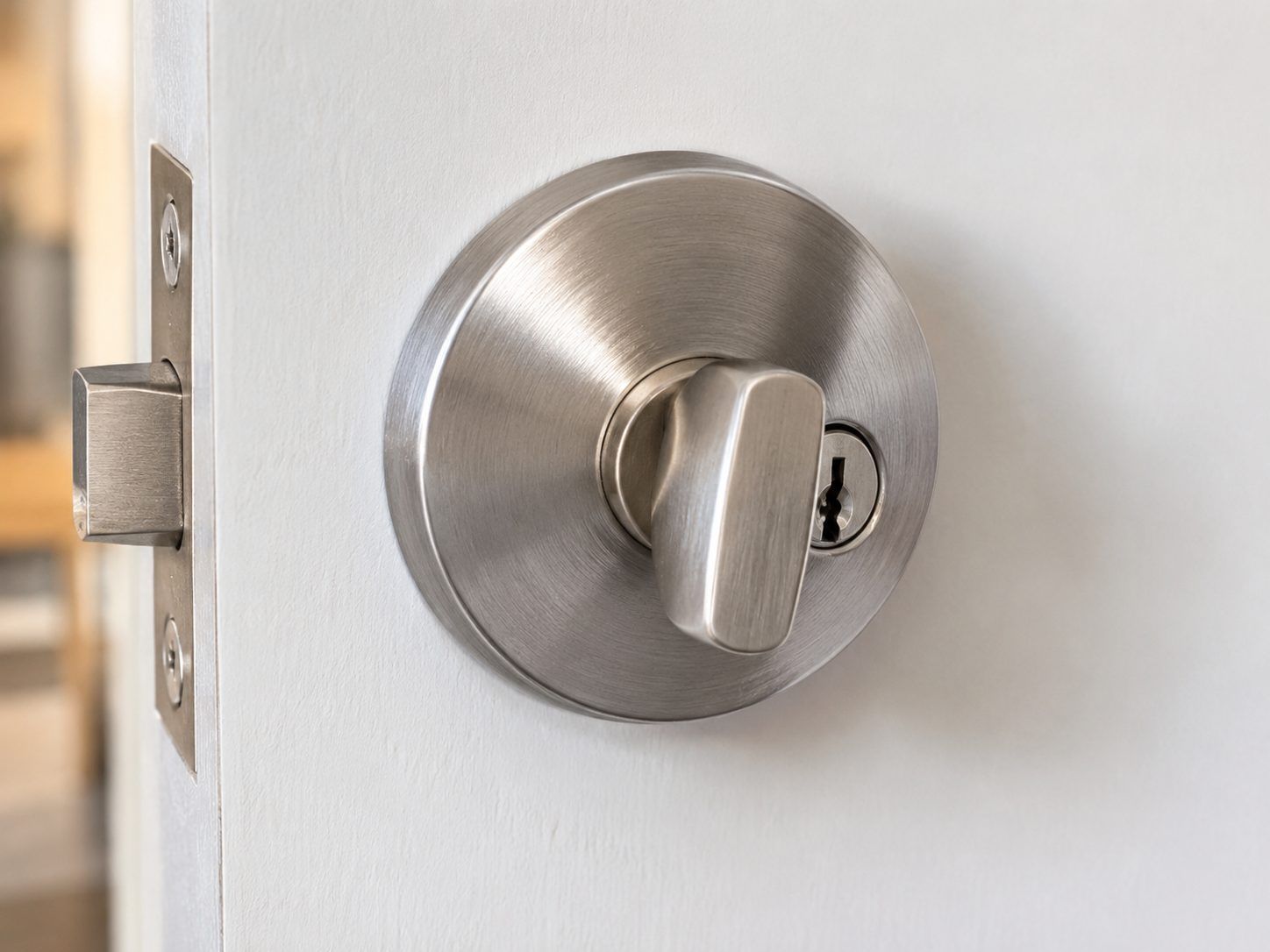
Before you buy anything or reach for a spray can, open the door and turn the thumbturn. Watch the bolt. Then close the door and try again.
That one comparison tells you which half of the problem you are dealing with. A lock does not know whether the door is open or closed. If the bolt throws smoothly in the air but stops when the door is shut, something in the frame is in its way, and the lock itself is probably healthy.
If the bolt is stiff, grinds or stops short even with the door wide open, the trouble is inside the lock, the cylinder or the key. Most of this guide deals with the first case, because that is the one a homeowner can usually fix.
A deadbolt won't lock diagnostic, in order
Work through these checks in sequence. Each one rules out a cause, so you stop as soon as you find the culprit instead of fixing things that were never broken.
-
Turn the bolt with the door open
Smooth means the lock is fine and you move on to alignment. Stiff or short means skip to the key and cylinder checks.
-
Close the door and push, then pull
If the bolt only throws while you push or pull on the door, the bolt and strike opening are out of line.
-
Mark the bolt to find the rub
Chalk or lipstick on the bolt shows exactly where it touches the strike or jamb.
-
Check the hinges and the gap
Tighten loose hinge screws and look for a door that sits lower on the latch side than it should.
-
Check the strike and its pocket
The strike opening should line up with the bolt, and the hole behind it must be deep enough for a full throw.
-
Check the key and cylinder
Try an original key. If it still sticks, consider cleaning and lubrication or a worn cylinder.
-
For smart locks, read the error
A jam alert or low battery warning points to the cause before you take anything apart.
What each symptom usually means
Match what you see to the most likely cause. If two rows seem to fit, start with the one that needs no tools.
| What happens | Most likely cause | First thing to try |
|---|---|---|
| Bolt is smooth with the door open, sticks with it closed | Bolt hitting the strike plate or jamb | Lipstick test, then adjust the strike |
| Locks only when you lift, push or pull the door | Door sag or a shifted strike | Tighten hinge screws, then recheck |
| Bolt goes partway and stops with the door closed | Strike pocket too shallow or blocked | Check pocket depth and clear debris |
| Worked last season, binds now | Door swelling or shrinking with humidity | Recheck alignment and strike clearance |
| Smart lock shows a jam error | Bolt meeting an obstruction | Fix alignment, then retest the motor |
| Smart lock beeps or flashes and stops working | Low batteries | Replace all batteries, use the key meanwhile |
| Bolt is stiff even with the door open | Dirty or worn cylinder, or internal damage | Clean and lubricate, or call a technician |
| Key turns only at an angle or with wiggling | Worn key or worn cylinder pins | Try an original key, not a copy |
When the bolt is hitting the strike
This is the most common reason a deadbolt won't lock, and it is almost always fixable without a new lock.
Find the exact contact point
Schlage's own tip is to put chalk or lipstick on the bolt, close the door, and lock and unlock it. The transfer mark tells you whether the bolt is hitting high, low, or on the latch-side edge of the strike opening, and by how much.
A dry-erase marker on the bolt face works the same way on a dark strike. Wipe the bolt clean after each test so you are reading a fresh mark every time.
Fix door sag at the hinges
If the mark is on the bottom edge of the strike opening, suspect the hinges first. Schlage names worn or loose hinges that let the door sag as a cause of locking trouble, and recommends new hinges or shims where tightening is not enough.
Open the door and tighten every hinge screw, especially on the top hinge, which carries the most load. If a screw just spins, its hole is stripped. Consumer Reports recommends 3-inch screws in hinges, and Family Handyman's advice is to use longer screws only where there is solid wood behind the jamb and to drill pilot holes first.
Adjust or open up the strike
Once the hinges are tight, test again. If the bolt still catches by a small amount on one edge, the fix is to open up that edge of the strike opening slightly, or chisel the wood behind it where the mark shows contact, which is the approach Schlage describes.
If the bolt misses by more than an edge, the strike needs to move. Yale's troubleshooting advice is to reposition the strike plate so it lines up with the bolt. Schlage support can also supply an alternate strike with more clearance for its locks. When moving a strike leaves weak, chewed-up wood behind, reinforcing the strike plate with a sturdier plate and long screws is worth doing at the same time.
Make sure the pocket is deep enough
A bolt that slides in partway and stops is often hitting the back of the hole, not the plate. Schlage support and Yale both say the pocket behind the strike should be at least 1 inch deep so the bolt can extend fully without dragging.
Schlage's B-Series instruction sheet asks for more: at least 1-1/4 inch. The sources differ, so check the instructions that came with your lock. If you do not have them, a pocket that meets the deeper figure satisfies both. Clear out paint, wood chips or old screws while you are there.
Smart deadbolt won't lock: jam errors and batteries
A motorized bolt is less forgiving than your hand. You might push through a slight rub without noticing, but the motor stops and reports a fault.
Schlage defines its "Lock Jammed" alert as the bolt meeting an obstruction while extending into the strike or retracting into the lock, and calls misalignment a common cause. So a smart deadbolt that won't lock gets the same alignment checks as a mechanical one: the lipstick test, hinges, strike position and pocket depth. Yale also notes that after a jam, the thumbturn or key may need extra pressure.
Batteries come next. On Yale's keypad deadbolt, a steady red light with five beeps means low battery, and Yale says to replace all four AA alkaline batteries. If the lock stops responding, use the mechanical key until you have fresh batteries.
When the key is the problem: stiffness and lubrication
If the bolt is stiff with the door open, start with the key. Schlage's service manual lists worn keys, and keys that are copies of copies, as common reasons a key stops working properly. Try an original key if you have one. If it works smoothly, have a fresh key cut to code instead of copying the worn one.
Clean first, then lubricate lightly
For a cylinder that is dirty or was lubricated with the wrong product, Schlage's Everest 29 service manual describes a clear sequence: clean the lock with a solvent such as electrical contact cleaner, blow it out with compressed air, then apply a factory-recommended lubricant. The factory uses Interflon Fin Lube TF, and the manual also lists powdered graphite, Lock Saver, Houdini, Lab Lube and Tri-Flow.
More is not better. The same manual warns that too much lubricant, especially powdered graphite, can pack inside the cylinder and stop the pins from moving. It also cautions that some solvents are flammable and some chemicals can dissolve the lock's protective finish.
That manual is written for a specific Schlage cylinder line, so treat it as a model of good practice and follow your own lock maker's instructions where they exist. Lubrication also will not fix a deadbolt that won't lock because of alignment; it only helps when the stiffness is inside the cylinder.
When stiffness means wear
If the key sticks or is hard to turn after a lock has been in use for a long time, Schlage's residential troubleshooting guide gives a blunt answer: the cylinder needs replacing. No amount of lubricant brings back worn pins.
If the bolt is stuck out and the door is open
Sometimes the opposite happens: the bolt is extended, the door is open, and the bolt will not retract. Schlage publishes a procedure for this. In summary, you remove the interior and exterior parts of the lock, then turn the remaining bolt mechanism through its opening with a flat-head screwdriver, turning toward the hinges.
If that does not retract it, Schlage's last resort is to pry off the flat metal piece at the bottom of the bolt so it collapses. That step destroys the bolt, so you will need a new deadbolt afterward.
Signs the cylinder or bolt needs a professional
When a deadbolt won't lock because of a fault inside the lock, DIY checks run out. These signs mean the problem is mechanical, not alignment:
- The bolt grinds, catches or stops short with the door open.
- The key turns only when held at an angle or wiggled, even an original key.
- The cylinder or the whole lock rotates in the door when you turn the key.
- The thumbturn spins without moving the bolt.
- The bolt extends but can be pushed back in by hand.
Any of these calls for professional deadbolt lock repair, where one of our Deadbolt Fixers technicians can decide whether the lock can be serviced or should be swapped. If the lock is old or builder-grade, replacing the deadbolt in the existing holes is often the better spend.
Field tip: write down when it happens
The pattern often matters more than the symptom. Note whether the deadbolt won't lock only in humid weather, only after the door slams, or only when the heat is on. Note whether it started after new weatherstripping or a fresh coat of paint on the jamb.
Those details point straight at the cause. If you end up calling us, tell our technician what you already tested with the door open and closed. It saves time on site and keeps the visit focused on the part that actually needs work.
Sources
- Door won't latch(Schlage)
- Troubleshooting: Yale Code(Yale Home)
- B-Series Deadbolts Installation Instructions(Schlage)
- Understanding Lock Jammed in the Schlage Home App History(Schlage)
- Rekeying Quick Start Guide (P513-325)(Schlage)
- Everest 29 SL Service Manual(Schlage)
- Common Mechanical Lock Troubleshooting Guide(Schlage)
- How to Remove a Stuck Deadbolt?(Schlage)
- How to Choose the Best Door Lock for Your Home(Consumer Reports)
- How to Reinforce Doors(Family Handyman)
Next step
Talk to a Deadbolt Fixers specialist
Tell us about the door, the lock and what is going wrong. We will tell you what the job involves before any work starts.
Frequently asked questions
Why does my deadbolt only lock when I push or pull on the door?
Pushing or pulling moves the bolt into line with the hole in the strike plate. The lock is usually fine; the strike or the door has shifted, often because of loose hinges.
Can humid or cold weather stop a deadbolt from locking?
Yes. Doors expand and contract with temperature and humidity, which Schlage cited as a reason for designing one keypad deadbolt as manual-throw, so a bolt that just clears in one season can bind in another.
How deep should the hole behind the strike plate be?
Schlage support and Yale both say at least 1 inch so the bolt can extend fully. Schlage's B-Series instruction sheet asks for at least 1-1/4 inch, so check your own lock's instructions.
How do I find where my deadbolt is hitting the strike plate?
Rub chalk or lipstick on the end and sides of the bolt, then close the door and turn the lock. The mark left on the strike or jamb shows where the bolt is catching.
Can loose hinge screws stop a deadbolt from locking?
They can. Schlage lists worn or loose hinges that let the door sag as a cause of locking trouble, because the bolt drops below the strike opening.
Is powdered graphite safe to use in a deadbolt?
Schlage's Everest 29 service manual lists powdered graphite as an acceptable alternative lubricant, but warns that too much can pack inside the cylinder and stop the pins moving. Use very little, and follow your own lock maker's guidance first.
What lubricant does Schlage use in its lock cylinders?
Schlage's Everest 29 service manual says the factory uses Interflon Fin Lube TF. It also lists powdered graphite, Lock Saver, Houdini, Lab Lube and Tri-Flow as alternatives.
What does Lock Jammed mean on a smart deadbolt?
Schlage defines it as the bolt meeting an obstruction while extending into the strike or retracting into the lock. Misalignment between the bolt and strike is a common cause.
Will a low battery stop a smart deadbolt from locking?
It can. On Yale's keypad deadbolt, a steady red light with five beeps signals low battery, and Yale says to replace all four AA alkaline batteries and use the mechanical key if the lock fails.
Why is my key suddenly hard to turn in the deadbolt?
A worn key or a copy made from another copy may no longer match the pins, so try an original key first. If the original also sticks after years of use, Schlage's troubleshooting guide says the cylinder needs replacing.
How do I get a deadbolt unstuck when the bolt is out and the door is open?
Schlage's procedure removes the inside and outside parts and turns the bolt mechanism with a flat-head screwdriver toward the hinges. Its last resort destroys the bolt, so you will need a new deadbolt afterward.
Should I file the strike plate opening or move the strike?
If the bolt catches by a small amount on one edge, opening up that edge is usually enough. If it misses by more, reposition the strike, and ask the lock maker whether it offers a strike with more clearance.
When is a deadbolt that won't lock a job for a locksmith?
When the bolt sticks, grinds or will not fully extend with the door open, the problem is inside the lock. The same goes for a cylinder that spins or a key that only works at an angle.