Three questions that sort every deadbolt
A deadbolt is a lock with a bolt that only moves when someone deliberately turns it. Schlage's training material puts it plainly: a deadbolt cannot lock itself. That single trait is what separates it from the spring latch in a knob or lever, which snaps shut on its own when the door closes.
Everything else about the many types of deadbolts comes down to three questions:
- Where are the keyholes? Key outside with a thumb turn inside (single cylinder), or a key on both sides (double cylinder).
- How is it mounted? Bored through the door, screwed to the inside surface (rim), or set into a deep pocket in the door edge (mortise).
- How is it operated? By key only, by keypad code, or by a smart lock that talks to your phone or home network.
A keypad deadbolt can also be a single cylinder bored lock. A commercial mortise deadbolt can also be double cylinder. Once you see the categories as separate choices, product names stop being confusing.
The parts every type shares
Strip any of the common types of deadbolts down and you find the same handful of parts. The drawing below shows a standard single cylinder lock, the version most homes have. The other types swap or move one or two of these parts.
Text version of this diagram
1. Key: operates the exterior cylinder.
2. Exterior cylinder: holds the pin tumblers and turns a flat tailpiece when the right key is used.
3. Bolt assembly: sits in the door edge. The bolt throws 1 inch, and the backset (door edge to cylinder center) is 2-3/8 or 2-3/4 inches.
4. Interior mounting plate: two through-bolts join it to the exterior cylinder and clamp the lock to the door.
5. Thumb turn: lets you lock and unlock from inside without a key.
6. Strike plate and screws: the bolt enters the strike in the frame; 3 inch screws reach the wall framing.
Here is what each type changes:
- Double cylinder: replaces the thumb turn (5) with a second keyed cylinder.
- Keypad and smart: replace the exterior cylinder (2) with a keypad or add electronics, and often add a motor to turn the bolt.
- Rim: moves the bolt (3) out of the door edge and onto the inside surface of the door.
- Mortise: replaces the small bolt assembly (3) with a box-shaped lock body set deep into the door edge.
- High security: upgrades the cylinder (2) with a pick- and drill-resistant design.
Single cylinder deadbolts
This is the default exterior door lock in the US: a key on the outside, a thumb turn on the inside. Anyone inside can get out with a quick turn, which is why most people never think about it.
Schlage's B60 is a typical example. It has a 1 inch bolt, fits a 2-3/8 or 2-3/4 inch backset, and comes with a strike reinforcer that uses 3 inch screws. Most mainstream brands follow the same door prep, so one single cylinder bored lock can usually replace another without new drilling.
If your door has no deadbolt at all, a new deadbolt installation means boring those holes from scratch. If one is already there and worn out or outdated, replacing the existing deadbolt is the simpler job.
Double cylinder deadbolts
A double cylinder deadbolt has a keyed cylinder on both sides of the door. No thumb turn, so nobody can open it from inside without a key. Commercial lines treat it as a separate function: Schlage's B600 series, for example, lists the B660 single cylinder and the B662 double cylinder as different models.
People usually consider one for a door with glass close to the lock. The catch is getting out in a fire. Building codes generally require the egress door of a home to open from inside without a key, but codes are adopted locally, and the local building official decides what applies to your door.
The pros, cons and code questions get a full treatment in our single vs double cylinder comparison. If you have already decided, see how we handle double cylinder deadbolt installation, including the key-storage plan.
Keypad and keyless deadbolts
A keyless deadbolt lets you in with a code instead of a key. Keypad deadbolts come in two broad styles, and the difference matters on a door that swells or shrinks with the seasons.
- Manual-throw keypads. The code releases the lock, and you turn the bolt by hand. Schlage once explained that its keypad deadbolt worked this way so the bolt would lock securely even as doors expand and contract with temperature and humidity.
- Motorized keypads. A motor drives the bolt after the code is accepted. If the bolt hits the strike, the lock reports a jam, and Schlage names misalignment as a common cause.
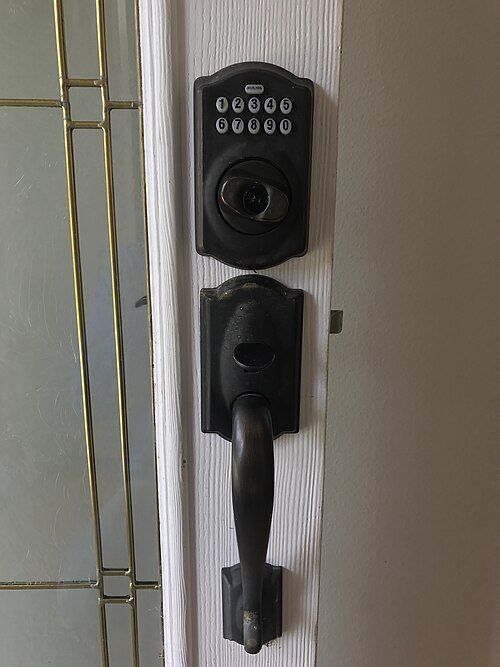
Batteries are the other thing to plan for. Yale's keypad deadbolt runs on four AA cells and warns with a steady red light and five beeps when they are low. Its instructions say to use the mechanical key if the lock fails, which is why the backup key belongs somewhere you can reach from outside.
Smart deadbolts
A smart deadbolt is a keypad or motorized lock that also connects to something: your phone, a voice assistant or a home automation hub. The Schlage Encode Plus, for example, has built-in Wi-Fi on a 2.4 GHz network, works with Apple Home, Alexa and Google Assistant, and runs on four AA batteries with a backup key.
Smart locks connect over Wi-Fi, Bluetooth, Z-Wave, Zigbee or Matter. The Connectivity Standards Alliance describes Thread, one of Matter's networks, as best suited to low-power devices such as locks.
There are two ways to make a deadbolt smart:
- Full replacement: the whole lock is swapped for a smart deadbolt with its own bolt and cylinder.
- Retrofit: a smart unit is added to the deadbolt already on the door. Consumer Reports notes that a retrofit's resistance to kicking, picking and drilling depends entirely on that existing deadbolt.
Either way, a motorized bolt needs a door that closes square, because the motor cannot force a bolt past a misaligned strike. Our smart deadbolt installation service at Deadbolt Fixers checks alignment before the app setup.
Bored, rim and mortise: how the lock mounts
Of all the ways to sort the types of deadbolts, mounting is the one most buyers overlook. It decides what can replace the lock without carpentry, and it is the hardest thing to change later.
Bored (tubular) deadbolts
The bored lock, also called a tubular deadbolt, is the standard on residential doors. Schlage's B-Series instructions call for a 2-1/8 inch cross bore through the door face (1-1/2 inches on some models) and a 1 inch edge bore, with a 2-3/8 or 2-3/4 inch backset.
Fine Homebuilding points out that the tubular bolt is neither spring-loaded nor beveled, and installation needs two holes drilled plus two shallow mortises: one for the faceplate on the door edge and one for the strike in the frame. That faceplate is small. Kwikset's 660 spec lists it at 1 inch by 2-1/4 inches.
Rim deadbolts
A rim lock is surface-mounted on the inside face of the door. Only the key cylinder passes through the door to the outside, so the exterior looks much like any other keyed deadbolt.
Because the lock body is not buried in the door edge, there is no faceplate visible on the edge of the door. That makes a rim lock easy to spot.
Mortise deadbolts
A mortise lock sits in a deep rectangular pocket cut into the door edge. Schlage calls mortise locks "the most secure type of lock" and notes that a mortise unit can combine a latch, a deadlocking latch and a deadbolt in one body, with the key cylinder threaded into a standardized housing.
Schlage's L400 small-case mortise deadbolt shows the style: a 1 inch stainless steel bolt, a 2-3/4 inch backset only, a 1-3/4 inch standard door, and a UL listing for 3-hour fire doors. Schlage suggests it for doors that do not need a latch, multi-stall restroom entrances and utility rooms.
Commercial and specialty deadbolts
Business doors add a few types of deadbolts you rarely see on houses. These all belong to the same family, but each solves a specific problem.
- Interconnected locks combine a lever lock and a deadbolt so one turn of the inside lever pulls back both. Schlage describes this as single-motion egress.
- Interchangeable core deadbolts let the key core slide out with a special control key. Schlage's B600 deadbolt offers full-size and small-format interchangeable core cylinders, and its service manual describes the control key working at a separate shear line.
- Function-specific models. The B600 line also lists a classroom deadbolt function and a door bolt function alongside the single and double cylinder versions.
Choosing between these depends on staffing, key control and the door itself. Our page on deadbolts for commercial doors covers storefront and mortise work.
High security deadbolts
A high security deadbolt is usually a standard body with a far better cylinder. Schlage's Primus cylinders are UL 437 listed and use hardened steel, anti-drill pins and a second sidebar mechanism, with keys that are tightly controlled to make unauthorized copies hard.
The cylinder is often the whole difference. Schlage's commercial B600 deadbolt, for instance, is UL 437 listed only when fitted with a Primus UL 437 cylinder. If you are weighing that upgrade, see what goes into a pick- and drill-resistant high security deadbolt.
Types of deadbolts compared side by side
This table puts the common types of deadbolts in one place. Remember that mounting and operation are separate choices, so a real lock can sit in more than one row.
| Type | Outside | Inside | Where you see it | Watch for |
|---|---|---|---|---|
| Single cylinder | Key | Thumb turn | Most home entry doors | A short-screw strike that only catches the jamb |
| Double cylinder | Key | Key | Doors with glass near the lock | Egress rules; a key must be on hand inside |
| Keypad, manual throw | Code (key backup) | Thumb turn | Rentals, side and garage entry doors | Batteries |
| Keypad, motorized | Code (key backup) | Thumb turn | Entry doors where hands are full | Strike alignment and batteries |
| Smart, full replacement | Code, app or key | Thumb turn | Homes with a smart home system | Network setup, batteries |
| Smart, retrofit | Your existing key | Motorized turn unit | Renters and owners keeping their lock | Only as strong as the existing deadbolt |
| Bored (tubular) | Varies | Varies | Nearly all residential doors | Backset must match: 2-3/8" or 2-3/4" |
| Rim | Key | Thumb turn | Mounted on the inside face of the door | Lock body is exposed on the inside |
| Mortise | Key | Thumb turn or key | Commercial doors, restrooms, utility rooms | Needs a deep pocket in the door edge |
| Interconnected | Key | Lever retracts both | Commercial doors | Replacing it means replacing both locks |
| High security cylinder | Restricted key | Thumb turn or key | Any door that needs key control | Keys come only from authorized sources |
Where grades fit in
Any of these types can be built to a higher or lower rating. Residential deadbolts are rated under ANSI/BHMA A156.40 with letters A, B and C, and many also carry a Grade 1, 2 or 3 under a separate auxiliary lock standard.
The type tells you how a lock works. The rating tells you how well it was tested. Our guide to what ANSI/BHMA deadbolt grades mean shows how to read both on the box.
How to identify the deadbolt on your door
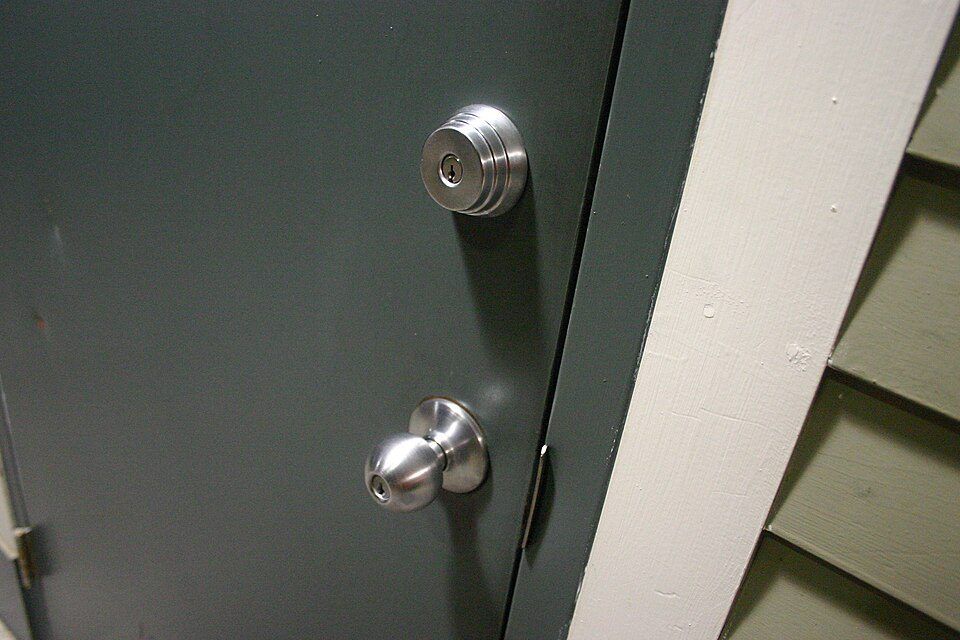
You can name your lock in under a minute without taking anything apart. Work through these checks with the door open.
-
Look at the inside face
A thumb turn means single cylinder. A second keyhole means double cylinder. A battery cover or motor housing means keypad or smart.
-
Look at the door edge
A small rectangular plate around the bolt means a bored (tubular) lock. A tall plate with the latch and bolt together means mortise. No plate at all, with the lock body on the inside face, means rim.
-
Check the outside
A plain keyhole, a keypad or a keypad with a keyhole tells you how it operates. A brand logo on the cylinder face helps us bring the right parts.
-
Measure the backset
On a bored lock, measure from the door edge to the center of the cylinder. It should be close to 2-3/8 or 2-3/4 inches.
Sources
- Schlage 101: Mechanical Locks(Schlage Commercial (Allegion))
- What's the difference: tubular dead bolts and rim locks(Fine Homebuilding)
- Single Cylinder Deadbolt (B60)(Schlage)
- B-Series Deadbolts Installation Instructions(Schlage)
- 660 Deadbolt spec sheet(Kwikset)
- L400 Small Case Mortise Deadbolt(Schlage Commercial)
- B600 Series Grade 1 Deadbolts(Schlage Commercial)
- Everest 29 SL Service Manual(Schlage)
- Encode Plus Smart Wi-Fi Deadbolt (BE499WB CEN)(Schlage)
- Understanding Lock Jammed in the Schlage Home App History(Schlage)
- Troubleshooting: Yale Code(Yale Home)
- Rekeying Quick Start Guide (P513-325)(Schlage)
- Matter FAQs(Connectivity Standards Alliance)
- How to Choose the Best Door Lock for Your Home(Consumer Reports)
- Primus security upgrade(Schlage Commercial)
- Decoded: Key-Operated Locking Devices(iDigHardware)
Next step
Talk to a Deadbolt Fixers specialist
Tell us about the door, the lock and what is going wrong. We will tell you what the job involves before any work starts.
Frequently asked questions
What is the most common type of deadbolt on a house?
A single cylinder bored deadbolt: a key cylinder outside, a thumb turn inside, and a bolt that slides out of a small faceplate in the door edge. It is what most front doors in the US are drilled for.
What is the difference between a deadbolt and a spring latch?
A spring latch has a beveled tongue that snaps shut when the door closes. A deadbolt is not spring-loaded or beveled, so it stays where it is until someone deliberately turns a key, thumb turn or motor.
What is a rim deadbolt?
A rim deadbolt is mounted on the inside surface of the door instead of inside it, with only the key cylinder passing through the door to the outside. Because nothing is cut into the door edge, it is easy to recognize.
Where are mortise deadbolts used?
Mostly on commercial doors. Schlage suggests its small-case mortise deadbolt for doors that do not need a latch, multi-stall restroom entrances and utility rooms.
Is a tubular deadbolt the same as a bored deadbolt?
In everyday use, yes. Both names describe the common residential deadbolt that fits a round hole through the door face and a smaller hole drilled into the door edge.
Do keypad deadbolts still have a keyhole?
Most do. Yale's keypad troubleshooting, for example, tells owners to use the mechanical key if the electronics fail, so keep at least one key somewhere you can reach from outside.
Can a smart lock be added to my existing deadbolt?
Retrofit smart locks are designed to work with the deadbolt already on the door. Consumer Reports notes that their resistance to kicking, picking and drilling depends entirely on that existing deadbolt.
What is an interconnected lock?
It is a knob or lever lock and a deadbolt built as one unit, so turning the inside lever pulls back both bolts at once. That single motion makes it faster to get out in an emergency.
Can a mortise deadbolt go on a fire-rated door?
Some models are listed for it. Schlage's L400 mortise deadbolt is UL listed for 3-hour fire doors, but the lock, door and frame all have to match the listing, so check before you buy.
How can I tell what type of deadbolt I have?
Look at the inside face for a thumb turn or a second keyhole, then look at the door edge for the shape of the faceplate. A small plate around the bolt means a bored lock, a tall plate means mortise, and no plate at all means a rim lock.
What is the difference between a motorized deadbolt and a manual keypad deadbolt?
A motorized deadbolt drives the bolt itself after you enter a code or use the app. A manual keypad deadbolt only releases when the code is accepted, and you turn the bolt by hand.
Is a keyless deadbolt the same as a smart deadbolt?
Not always. Keyless just means you can get in without a key, usually with a code, while a smart deadbolt also connects to your phone or home network over Wi-Fi, Bluetooth, Z-Wave, Zigbee or Matter.
What is an interchangeable core deadbolt?
It is a commercial deadbolt whose key core can be pulled out with a special control key and swapped for another core. Businesses use it to change keys on many doors quickly without taking locks apart.